Beyond Acceleration. The Five Shifts Shaping Consumer-Centric Brand Building in 2026


The Five Shifts Shaping Consumer-Centric Brand Building in 2026
Speed has defined growth for the last decade.
Faster innovation.
Faster communication.
Faster reactions to change.
Faster to market.
But across markets and cultures, there are signals that are becoming hard to ignore:
The consumer is no longer accelerating.
They are recalibrating.
They want a life.

Across my work with lifestyle, outdoor, and fashion brands, I see the same tension repeat itself. Organizations are pushing for momentum, while consumers are quietly slowing down—re-evaluating what feels sustainable, trustworthy, and emotionally manageable.
This shift is not a rejection of progress, but rather a departure from constant optimization. There is a shift towards balance, stability, and value systems that prioritize emotional safety over constant performance.
This is the context describing Beyond Acceleration: The Five Shifts Shaping Consumer-Centric Brand Building
Five shifts that together describe a recalibration. Individually, each shift explains a behavioral or cultural change. Together, they form a new logic for brand building.

⸻
Five Shifts Shaping Consumer-Centric Brand Building
Pattern # 01 The Connection Economy

Why connection has become the primary currency of trust and relevance
Attention is no longer the scarce resource.
Connection is.
In an overloaded and uncertain world, consumers are narrowing their emotional bandwidth. They are not looking to discover more brands; they are deciding which ones deserve a place in their lives.
Connection functions as emotional risk reduction.
What feels:
• familiar
• culturally close
• human
• consistent
…feels safer.
This is why communities, peer validation, local relevance, and relational brands are gaining ground. Not because consumers seek intimacy from brands, but because connection signals trust.

Strategic implication:
Brands can no longer rely on reach alone to stay relevant. Relevance is built through resonance, through behaving in ways that people recognize, understand, and feel comfortable returning to. Contact me to learn more about The Connection Economy
⸻
Pattern # 02 Rhythm Over Optimisation

Why performance culture is losing authority, and what replaces it
For years, optimization was framed as progress.
More efficiency. More productivity. More improvement.
But performance culture is losing credibility.
Consumers are increasingly resistant to systems that promise constant growth without acknowledging human limits. Instead of asking, “How can I get more out of this?" people are asking, “Can this fit into my life without exhausting me?”
Rhythm replaces optimization when:
• balance outweighs intensity
• sustainability is about energy, not output
• longevity matters more than speed

Strategic implication:
Brands that continue to communicate pressure, optimization, or constant improvement risk feeling out of sync. The future belongs to brands that respect pace, recovery, and emotional sustainability, not just performance metrics. Let's Connect Around This
⸻
Pattern # 03 Nature as Regulator

Why well-being is moving away from optimisation and toward balance
Well-being has become over-engineered.
Metrics, hacks, and routines have promised control over body and mind, but consumers are increasingly turning toward nature as something that regulates rather than optimizes.
Nature is no longer framed as a backdrop or an achievement.
It is experienced as a stabilizing force.
This shift reframes nature from:
• lifestyle accessory → emotional anchor
• sustainability topic → lived experience
• performance enhancer → restorative system

Strategic implication:
Brands need to move away from instructing consumers how to optimize themselves and instead create space for balance, grounding, and recovery. Less guidance. More permission. Connect and talk nature with me.
⸻
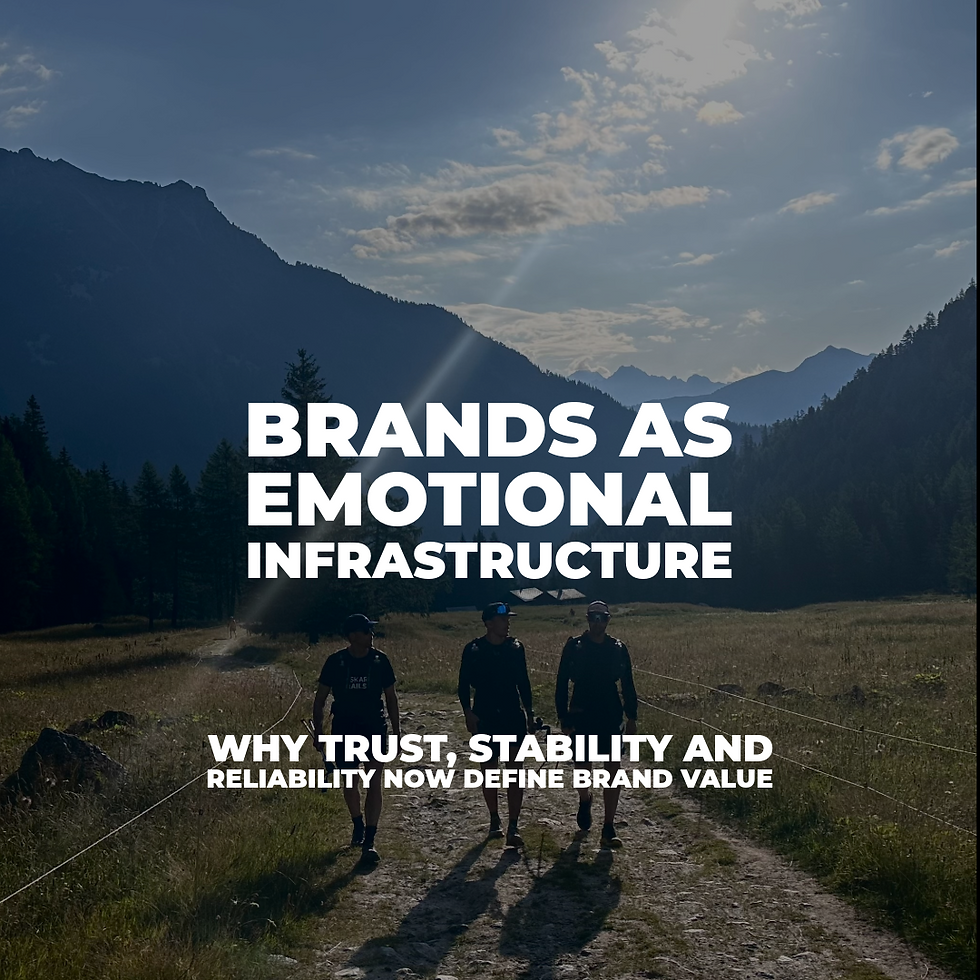
Pattern # 04 Brands as Emotional Infrastructure

Why brands are increasingly expected to stabilise daily life, not excite it
In times of uncertainty, people don’t look for excitement.
They look for stability.
As trust in institutions continues to erode, brands are increasingly expected to act as emotional infrastructure, not by leading moral debates, but by being reliable, predictable, and present.
Brands that earn trust today:
• reduce friction
• provide clarity
• behave consistently
• support everyday decisions
Excitement hasn’t disappeared. But stability has become more valuable in the mind of the consumer.
Strategic implication:
Reliability, rather than novelty, is increasingly creating brand value. Brands that make life feel calmer, clearer, and easier to navigate will outperform those that focus solely on attention and activation. Let's connect and talk brand trust
⸻
Pattern # 05 The Era of Loss
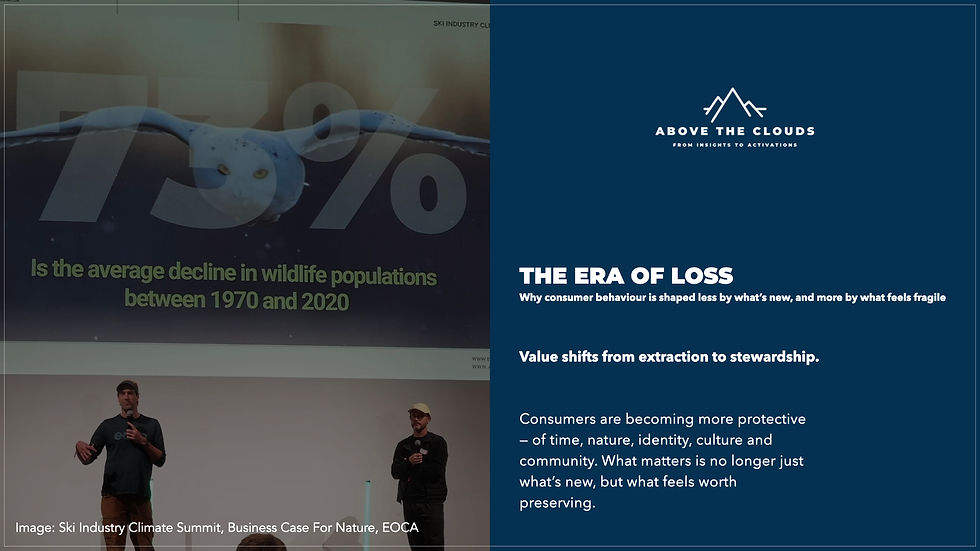
Why consumer behaviour is shaped less by what’s new, and more by what feels fragile
We are operating in an Era of Loss.
Loss of certainty.
Loss of biodiversity.
Loss of economic security.
Loss of imagined futures.
This changes how value is perceived.
Consumers are becoming more protective of time, nature, identity, culture, and community. What matters is no longer just what’s new, but what feels worth preserving.
Value shifts towards stewardship.

Strategic implication:
Brands that continue to chase novelty without care risk eroding trust. Brands that demonstrate responsibility, restraint, and long-term thinking will feel more relevant in a world shaped by fragility. Let's Connect
⸻
What this means for brand leaders
These five shifts don’t demand more activity.
They demand better judgment.
They challenge leadership teams to rethink:
• what they optimise for
• how they measure relevance
• where trust is actually built
• and how much emotional load their brand puts on people
From foresight to focused action
I work with leadership teams through strategy sprints and insight-led projects that translate shifts like these into:
priorities
brand positioning
direction and concepts
If you are keen to explore what these shifts mean for your brand, get in touch.

⸻
Consumer-centric brand building is not about predicting what comes next. It’s about understanding the emotional logic shaping decisions now—and making fewer wrong decisions because of it. This is where insight must turn into direction.


Kommentarer