From “The New Sustainable Consumer” to The NXT Consumer

Five years of tracking how sustainability moved from aspiration to emotional reality
In 2020, when I published The New Sustainable Consumer report, sustainability still carried a certain optimism. The discussion was driven by awareness, transparency, better choices, and the belief that consumers were moving toward a more conscious future. Five years later, the conversation looks a bit different. What started as a study about sustainability and consumer behavior gradually became a long-term mapping of something much bigger: how uncertainty, climate anxiety, social identity, trust, aspiration, and emotional fatigue shape consumer behavior.
“What becomes visible when you track consumers through five years of overlapping crises, sustainability shifts, emotional fatigue and changing trust?”

“Consumers have not stopped caring. They have changed how caring manifests under pressure.”
Across these reports, one thing has remained consistent: consumer behavior does not change because people are instructed to change. It changes because culture changes what people value, fear, aspire to, and emotionally reward.
That idea became the foundation for both the NXT reports and the broader strategic framework I use today through Above The Clouds. The work has never been about trend spotting in isolation. It has been about understanding patterns. The deeper cultural and emotional shifts underneath visible behavior. Market change rarely starts in business. It starts in culture, moves through behavior, and eventually forces brands to adapt.
“The real shift is rarely visible first in what people buy. It starts in aspiration or what people feel they can no longer carry.”

The Pattern Philosophy
Over the years, the reports evolved into what I today call the ATC Pattern Model.
A way of understanding how macro tensions shape consumer expectations and how those expectations eventually reshape categories, branding, communication, and demand.
The model follows three connected layers:
Cultural shifts
Consumer behaviour
Brand adaptation
This matters because brands often react too late.
They focus on trends when the real movement already happened at a cultural level.
“By the time a trend becomes visible in the market, the emotional shift has often already happened in culture.”

By the time “sustainability” appeared in every campaign, consumers had already moved on emotionally. The language became diluted. Trust weakened. Skepticism increased. That shift became increasingly visible throughout the reports.
From “The New Sustainable Consumer”
to The NXT Sustainable Consumer ...
2020: Sustainability as a search for truth
The first report, The New Sustainable Consumer and her search for truth, was created during the pandemic. At the time, much of the discussion focused on “the next normal." But what interested me more was the behavioral transformation happening underneath.

The pandemic accelerated reflection.

People questioned consumption habits, priorities, trust in institutions, and the role of brands in society. Sustainability became emotionally connected to identity, ethics, and future security.

But already here there was an important tension:
Consumers wanted change, but the market responded mostly with messaging.
“Brands should no longer build trust through positioning alone. Consumers increasingly expect visible participation, proof and emotional honesty.”
That gap between communication and lived reality would later become one of the defining themes across the NXT reports.
2022: Sustainability Status & Social identity
By 2022, in the NXT Sustainable Consumer report, we found that sustainability had moved from awareness into social signaling. Consumers increasingly used sustainability to express values, belonging, and aspiration.

This was the year where the archetypes became more distinct:
Dedicated Pioneers
Anxious Activists
Eco-Swingers
Not as demographic groups, but as behavioral mindsets.

One important insight from this period was that sustainability was no longer primarily rational. It had become emotional, social, and status-driven.
“People did not consume sustainability only to reduce harm. They also consumed it to express identity, signal status, aspiration and belonging.”

Knowledge created cultural capital. Certain behaviors became identity markers. Brands became symbols of personal ethics and social positioning.
At the same time, greenwashing and overuse of sustainability language started to erode trust. The term itself began losing clarity and meaning.
2023 The post-purpose consumer
The 2023 NXT Sustainable Consumer Report marked an important transition.
I called it The Post Purpose Sustainable Consumer because it became increasingly clear that consumers were no longer satisfied with brand purpose alone.


Purpose messaging had become mainstream. Almost every brand claimed to stand for something. But consumers had started asking a different question: “What are you actually doing?”
“The shift moved from narrative to evidence. From intention to accountability.”

The research showed rising skepticism toward generic sustainability communication and increasing demand for proof, transparency, punishments, and measurable action.

At the same time, another contradiction emerged:
Eight out of ten consumers still identified sustainability as part of their self-image.
In other words, people still wanted sustainability to matter. But they no longer trusted the communication and actions surrounding it from brands, and they didn't trust politicians to act responsibly. The consumer felt left alone. With all the responsibility.
“Consumers still wanted sustainability to matter. They just no longer wanted to carry the emotional burden alone.”

That tension between aspiration, perceived responsibility, and skepticism became one of the important and recurring findings of the NXT series.
2024 Sustainability: Anxiety, emotional fatigue and the “grinding discomfort”
The 2024 NXT Sustainable Consumer Report was probably the most psychologically revealing year in the study so far.


This was the year where sustainability stopped feeling inspirational for many consumers and instead became emotionally exhausting.
“Consumers were no longer struggling with awareness. They were struggling with emotional capacity.”
The report explored:
Sustainability anxiety
Fear of being judged
Escapism
Emotional paralysis
The “black hole of actions”
The growing discomfort between ideals and reality
Consumers still cared deeply. But many no longer believed their actions mattered.
“This was not indifference. It was emotional overload colliding with perceived powerlessness.”

This created a behavioral contradiction: people wanted to consume responsibly while simultaneously needing relief from constant responsibility.

For brands, this changed the communication challenge completely.
“Brand relevance shifted from aspiration to reassurance.”
The role of sustainability communication was no longer simply to educate or inspire. It became equally important to reduce friction, simplify choices, and create emotional reassurance.

At the same time, another major insight emerged:
Consumers increasingly expected brands to actively participate in environmental and social issues, not merely comment on them.

The expectation shifted from awareness to participation. From Signal To Substance.
“Consumers increasingly rewarded brands that made responsibility feel tangible, visible, and emotionally credible.”
2025 The sustainability paradox
The latest evolution of the NXT research included Germany 2025 and points toward what I describe as the grinding feeling and Sustainability Paradox.

Consumers simultaneously
care deeply
feel overwhelmed
seek simplicity
distrust messaging
want brands to lead
but resist being morally instructed
This is not consumer hypocrisy. It is adaptation to permanent uncertainty.
“Contradiction is no longer a weakness in consumer behaviour. It is how people cope with instability, pressure and emotional fatigue.”

The reports increasingly point toward what I call "future fatigue": a psychological state where consumers emotionally care about the future but mentally struggle to process the constant pressure surrounding it.

And this changes how brands need to operate.
“The future belongs less to brands that demand attention and more to brands that create emotional clarity, trust and relief.”
The strongest brands moving forward will likely not be the loudest sustainability brands.
They will be the brands that:
“Emotional usefulness is becoming as important as functional usefulness.”
reduce complexity
create emotional trust
provide credibility
help consumers feel capable rather than guilty
reconnect people with meaning, nature, rhythm and belonging

What the last five years have really shown
Looking back across the reports, the most important lesson is probably this:
Sustainability has never only been about sustainability.
“It has always been a mirror reflecting deeper emotional and cultural tensions inside society.”
It has been a lens into much larger emotional and cultural shifts:
trust
identity
anxiety
aspiration
belonging
status
overload
hope
emotional resilience
And increasingly: the search for emotional stability in an unstable world.
“Consumers are not simply searching for better products. They are searching for ways to feel more grounded, capable and emotionally secure.”
That is why consumer insight cannot be reduced to sales numbers, trend lists, or demographic segmentation.
If brands want to remain culturally relevant, they need to understand the emotional systems shaping behavior underneath the visible market movements.
Not just what consumers buy. But what people are trying to protect, restore, or reconnect with through consumption.
“The strongest consumer insights today are rarely about products alone. They are about emotional regulation, identity and belonging.”
“Consumer insight is not the end goal. It’s a tool. A powerful one, but only if it’s mastered, interpreted, and translated into strategy, creativity, and action.”

The next chapter
The next chapter of the NXT research moves beyond sustainability as a standalone topic and instead looks at the wider emotional recalibration shaping consumer behavior moving into 2026 and beyond.
The new report, CARE FOR THE OUTDOORS, builds on five interconnected consumer movements that have gradually emerged throughout the NXT studies over the last five years.

The Connection Economy explores how emotional trust, familiarity, and meaningful connection are replacing visibility and constant communication as the new drivers of brand relevance.
Rhythm Over Optimization examines the rejection of perpetual performance culture, as consumers increasingly seek balance, recovery, and more sustainable ways of living.
Nature as Regulator looks at how nature is evolving from backdrop and activity into emotional infrastructure a tool for nervous-system recovery, mental well-being, and regulation.
Brands as Emotional Infrastructure explores the shift from brands as storytellers and aspirational symbols toward brands that create stability, reassurance, and emotional reliability in everyday life.
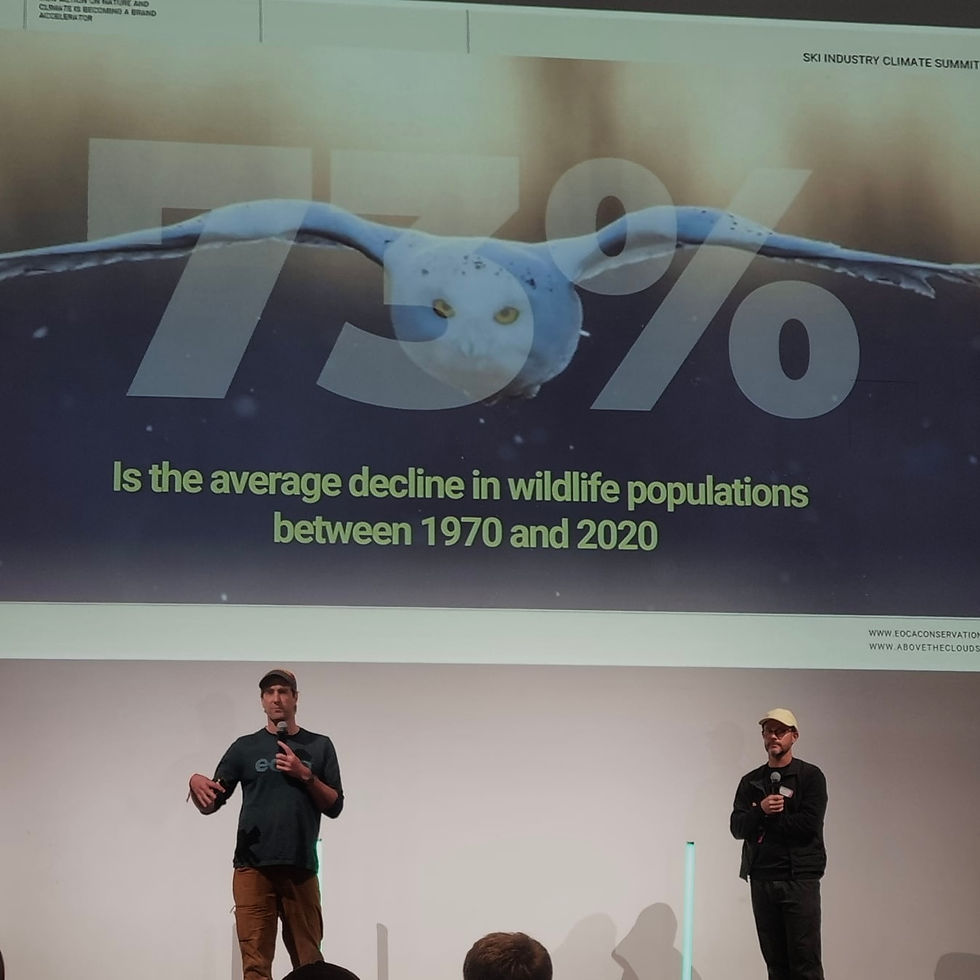
And finally, The Era of Loss examines how fragility, climate anxiety, disappearing seasons, biodiversity loss, and social instability are reshaping what people value, protect, and emotionally attach themselves to.
Together, these movements point toward a larger shift: the future consumer is not primarily searching for more acceleration, more optimization, or more stimulation.
“The next consumer era will not be defined by who innovates the fastest, but by who understands emotional reality the deepest.”
They are searching for reconnection, rhythm, trust, and emotional sustainability in an increasingly unstable world.
“The brands that matter tomorrow may be the ones that help people feel less overwhelmed today.”
The NXT Consumer Reports are part of Above The Clouds Future Series, a long-term research platform exploring sustainability, culture, consumer behavior, and future brand relevance across lifestyle, outdoor, and fashion.
Closing thoughts
If you are interested in exploring more about how cultural shifts, emotional behavior, and changing consumer expectations can help shape your future brand relevance.
My work combines consumer insight, strategic foresight, and brand strategy to help progressive lifestyle, outdoor, and fashion brands create clearer direction, stronger positioning, and more meaningful ways to connect with people.
From insights and research to strategy sprints, workshops, and Winning Game frameworks, the focus is always the same: turning understanding into action.
I don't work as a "consumer insight consultant" in isolation
I work with insight as the starting point for building strategies, concepts, and communication that create value, that create emotions, and that people want to act on.
Real magic happens when insight, strategy, and activation are connected.
“Because understanding consumers has never been enough on its own. The real value comes from knowing how to translate that understanding into meaningful action.”
When brands understand why consumers behave the way they do and know how to respond with clarity, honesty, and intent.
“The strongest brands of the next decade will function less like advertisers and more like emotional infrastructure.”


Kommentarer